The Importance of Tutoring in Inclusive Higher Education
Universities across Europe have welcomed thousands of Ukrainian students who have been affected by displacement and educational disruption caused by the war. While access to higher education is essential, successful inclusion requires more than enrolment. Students must feel supported, connected, and able to participate fully in academic and social life. In this context, university tutors play a crucial role in facilitating inclusion and promoting student well-being.
The UkraStud project, funded through the Erasmus+ programme, recognizes the importance of tutors as key actors in creating welcoming and supportive university environments. Through its Online Course for University Tutors and Professors (R2), the project provides practical knowledge, strategies, and tools that help academic and administrative staff better respond to the needs of Ukrainian students.
Tutors as Bridges Between Students and Universities
For many Ukrainian students, adapting to a new educational system involves navigating unfamiliar administrative procedures, language barriers, cultural differences, and social challenges. Tutors often become the first point of contact for students seeking guidance and support.
Effective tutors help students understand university regulations, access available services, connect with academic departments, and overcome practical difficulties. They also assist students in developing confidence and independence while encouraging active participation in university life.
Research conducted within the UkraStud project highlights that support from tutors is one of the most important factors contributing to student satisfaction with university inclusion policies. Students who receive adequate guidance are more likely to experience positive academic and social outcomes.
Promoting Social and Psychological Well-Being
Student inclusion is closely linked to psychological and social well-being. International and displaced students may experience feelings of loneliness, uncertainty, and social isolation during their transition to a new country and educational environment.
Tutors can contribute significantly to students’ well-being by:
- Providing regular communication and guidance;
- Encouraging participation in social and academic activities;
- Facilitating connections with local students and university communities;
- Identifying students who may need additional support services;
- Promoting a sense of belonging and inclusion.
Through these actions, tutors help students build meaningful relationships and develop confidence in their new environment.
Developing Inclusive Competencies Through Training
While tutors play an important role, effective support requires specific competencies and preparation. The UkraStud Online Course was designed to strengthen these competencies through practical and evidence-based training modules.
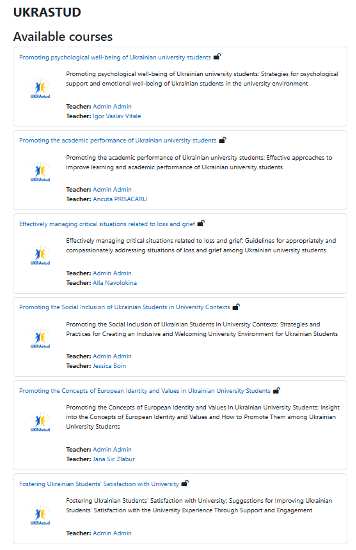
The course covers topics such as:
- Social inclusion strategies for Ukrainian students;
- Psychological support and emotional well-being;
- Effective communication and intercultural understanding;
- Managing sensitive situations and student vulnerabilities;
- Promoting academic success and engagement;
- Fostering European values and identity.
The training combines video lessons, interactive scenarios, practical examples, and self-assessment activities, allowing participants to apply newly acquired knowledge directly to their professional practice.
Building More Inclusive Universities
Inclusive universities are created through everyday actions and supportive relationships. Tutors are uniquely positioned to influence students’ experiences by providing guidance, encouragement, and practical assistance throughout their academic journey.
By investing in tutor training and professional development, universities can strengthen their capacity to support Ukrainian students and other vulnerable groups. The knowledge and skills developed through the UkraStud Online Course contribute not only to student inclusion but also to the creation of more responsive, diverse, and welcoming higher education institutions.
Conclusion
The inclusion of Ukrainian students in European higher education requires coordinated efforts from universities, academic staff, and support services. Tutors serve as a vital link between students and institutions, helping to transform access into meaningful participation.
The UkraStud Online Course demonstrates how targeted training can equip tutors with the competencies needed to support student well-being, academic success, and social integration. As universities continue to respond to the challenges of internationalization and displacement, the role of tutors will remain essential in fostering inclusive and supportive learning environments for all students.