The rapidly changing landscape of higher education requires universities to adopt innovative approaches that address the diverse needs of students. This challenge has become even more significant following the arrival of thousands of Ukrainian students in European universities. To support both students and academic staff, the UkraStud project has developed a range of innovative educational tools and methodologies through its Online Course for University Tutors and Professors.
The project aims not only to provide knowledge but also to create engaging learning experiences that equip tutors and academic staff with practical skills for supporting student inclusion, well-being, and academic success.
Combining Research and Practice
One of the distinguishing features of the UkraStud Online Course is its evidence-based design. The course content has been developed using findings from research conducted among Ukrainian students in partner countries, ensuring that the educational materials directly address real challenges and needs.
By integrating research outcomes into training materials, the project bridges the gap between theory and practice. Participants are encouraged to apply research-informed strategies in their daily interactions with students, making the learning experience highly relevant and impactful.
Interactive Learning Through Digital Technologies
Traditional training methods are increasingly being complemented by innovative digital learning solutions. The UkraStud Online Course incorporates a variety of technologies designed to enhance engagement and knowledge retention.
Among the innovative tools developed within the project are:
- Interactive H5P learning activities;
- Scenario-based learning exercises;
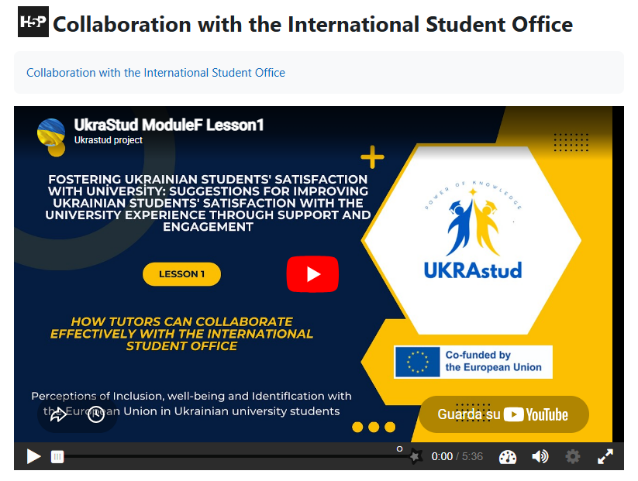
- Multimedia educational resources;
- Self-assessment tools;
- Online quizzes and knowledge tests;
- Digital micro-credential opportunities.
These resources allow participants to actively engage with the content rather than passively consuming information. As a result, learning becomes more dynamic, personalized, and effective.
Scenario-Based Learning for Real-Life Challenges
A particularly innovative aspect of the course is the use of scenario-based learning. Participants are presented with realistic situations that reflect challenges commonly encountered when supporting Ukrainian students and other international learners.
For example, tutors may be asked to respond to situations involving social isolation, academic difficulties, cultural misunderstandings, or emotional distress. Through guided decision-making activities, participants can explore different solutions and understand the consequences of their choices.
This practical approach strengthens problem-solving skills and increases confidence when dealing with complex student support situations.
Micro-Credentials and Flexible Learning Pathways
The project also embraces modern approaches to lifelong learning through the integration of micro-credentials. These digital recognitions provide evidence of learning achievements and encourage participants to engage in continuous professional development.
The flexibility of the online course allows tutors and academic staff to complete modules according to their individual needs and schedules. This learner-centred approach supports accessibility and increases participation among higher education professionals.
Building Sustainable Innovation in Higher Education
The innovative methodologies developed within the UkraStud project are designed to have a long-term impact beyond the project’s duration. The educational resources can be adapted and reused by universities seeking to improve inclusion practices and student support services.
By combining research, digital technologies, interactive learning, and competency-based education, UkraStud demonstrates how innovation can contribute to more inclusive and responsive higher education systems.
Conclusion
Innovation is essential for addressing the evolving challenges of higher education. Through its Online Course for University Tutors and Professors, the UkraStud project offers a model of how digital tools, interactive methodologies, and evidence-based practices can strengthen the capacity of universities to support students effectively.
The innovative educational approaches developed through the project contribute not only to the inclusion of Ukrainian students but also to the broader goal of creating more flexible, accessible, and student-centred higher education environments across Europe.