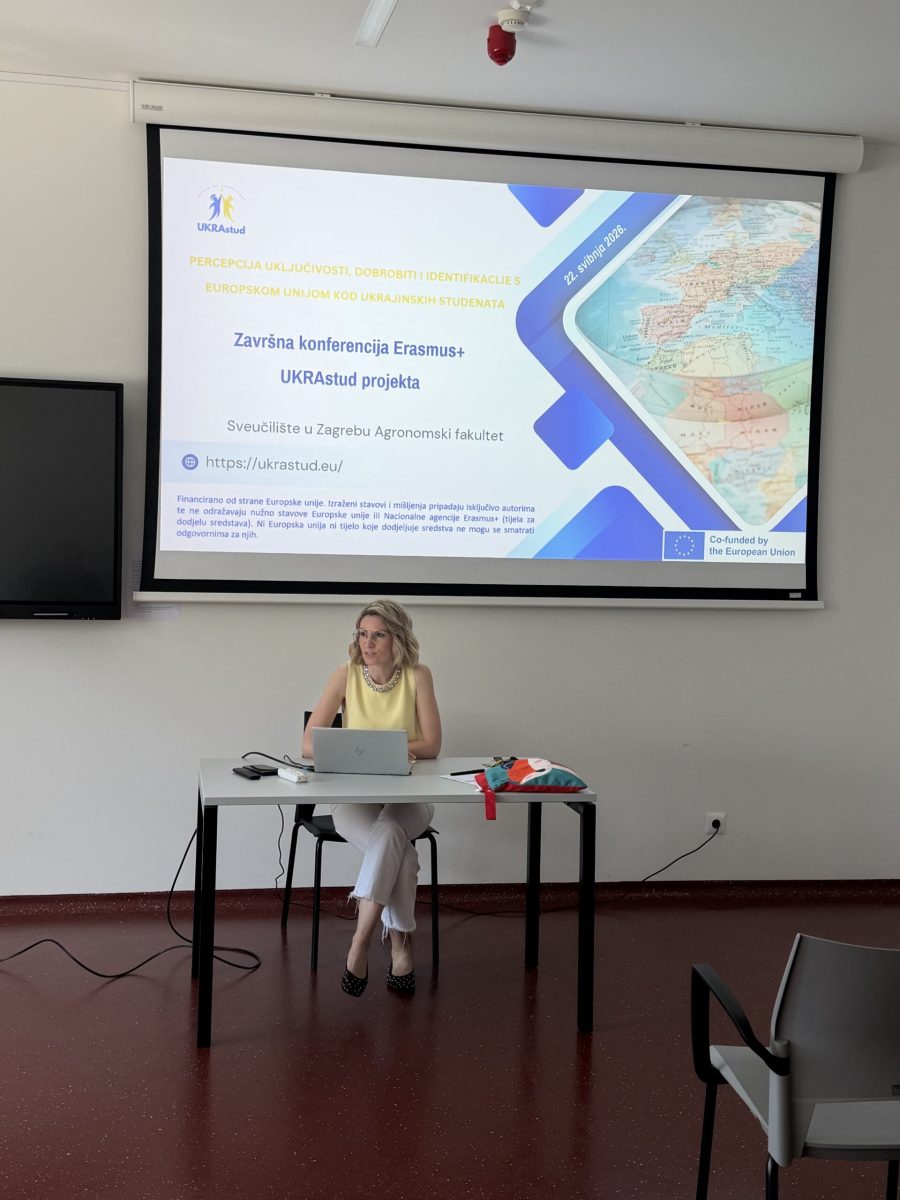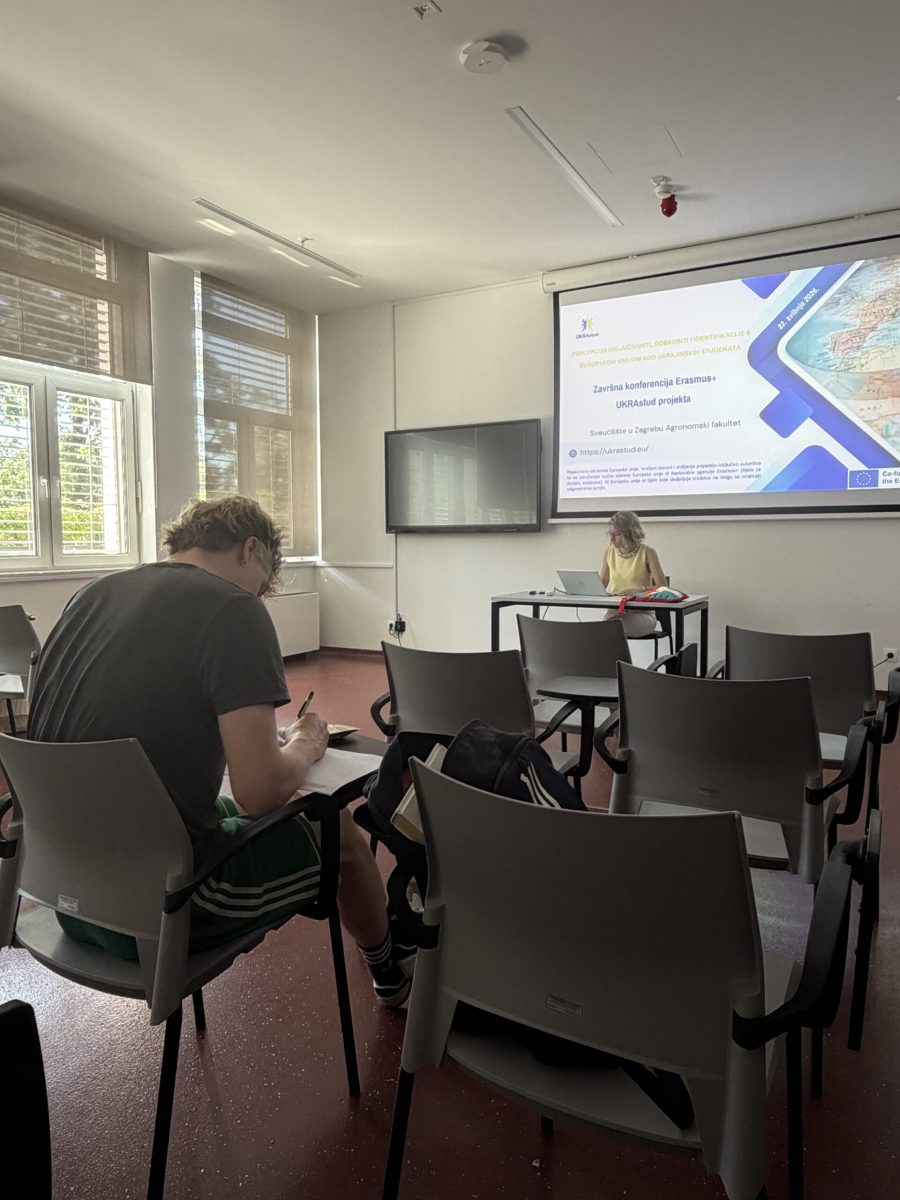

The presentation was delivered by the University of Zagreb Faculty of Agriculture on 22 May 2026. The presentation highlighted four main priorities of the project:
- promoting inclusive educational practices;
- supporting students’ psychological well-being and resilience;
- strengthening European values and intercultural dialogue;
- encouraging cooperation and the exchange of good practices between institutions.
The research aimed to understand Ukrainian university students’ experiences in several areas. In particular, it examined their satisfaction with university inclusion policies, their psychological and social well-being, and their attitudes towards the population of their host country. It also looked at how these attitudes could influence students’ perceptions of other EU countries and their identification with the European Union. The study included 172 Ukrainian university students enrolled at universities in Croatia, Italy, Romania and Türkiye. The average age was 21.86 years. The participants included 47 men, 119 women and 6 people recorded in the “other” category.
The first major result concerned inclusion. According to the presentation, Ukrainian students were satisfied with the inclusion policies implemented by their universities.
The second result concerned psychological and social well-being. Ukrainian students were reported to have a good level of psychological and social well-being. The presentation specifically connects this well-being with satisfaction with university inclusion policies and with positive contact with local students and the local population.
The third area concerned students’ attitudes towards host-country populations and other EU countries. The presentation states that Ukrainian students generally had positive attitudes towards both the population of their host country and the populations of other EU countries.
A separate section presented the Romanian experience. The slides state that 418 Ukrainian students were facing different challenges. Some students finished secondary school at the age of 16 and were therefore legally minors in Romania. The presentation also noted that reported language knowledge did not always correspond to actual communication ability, with some students having limited knowledge of both Romanian and English.